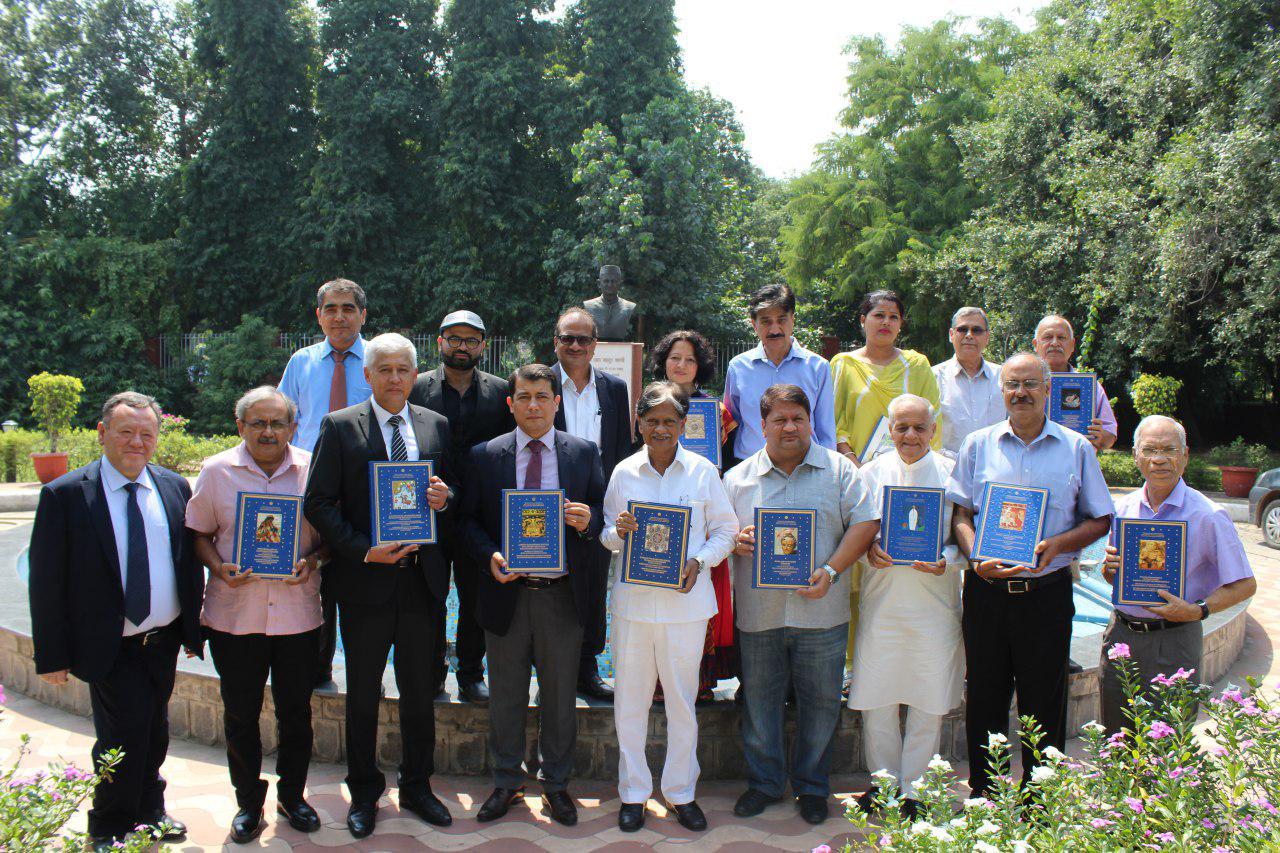
In the framework of the media event organized in India by the National Association of Electronic Media and the Embassy of Uzbekistan in this country with the sponsorship of the Eriell Group, a series of events was held on cultural and educational ties between the two countries.
On September 25, 2018, the exhibition “Uzbekistan – India: dialogue of cultures” opened at the National Museum of India, which aroused great interest among the local community.
At the opening of the exhibition, a documentary was presented on the large-scale reforms being carried out in Uzbekistan under the leadership of the head of our state, creating conditions for fruitful cooperation in many areas, including in the cultural and humanitarian sphere.
“- Together with our Uzbek partners, we are working on new projects,” says Katibur Rahman, a researcher at the National Museum of India. – We are glad that we managed to organize this exhibition. Its exposition was made up of exhibits stored in our museum related to the history of Uzbek statehood, the rich cultural heritage of your people, rare authentic manuscripts from the libraries of Huda Bakhsh and Rampur Raza, as well as a series of books published as part of the project “Cultural heritage of Uzbekistan – the path to dialogue between peoples and countries” of the National Association of Electronic Mass Media of Uzbekistan.
The official reception ceremony held at the embassy of our country in India spoke about the prospects for the development of bilateral cultural and educational ties. Representatives of the official and academic circles of the two countries paid special attention to the issues of joint study of unique documents stored in museums and related to cooperation between Uzbekistan and India.
“There are over 200 manuscripts in our library related to the cultural heritage of the Uzbek people,” said Robert Chongtu, acting director of the library of Hood Bakhsh. “On the eve of the visit of the President of Uzbekistan, we published a catalog of these works.
“The pride of our library is copies of rare manuscripts of Babur’s sofa,” said library director Rampur Raza Professor Sayyid Hassan Abbos. – Their value for Indian culture lies in the fact that they use words from the Hindi language. On the manuscripts, you can see personally edited changes by Babur. Their authenticity was confirmed by one of his descendants – Jahongir. The staff of our library is ready to intensify joint work on the study of historical manuscripts and documents related to the culture of the Uzbek people.
At a scientific seminar entitled “Cultural Heritage – the Bridge of the Uzbek-Indian Dialogue”, well-known scientists of the two countries discussed the content of cooperation, the prospects for implementing new projects and enhancing scientific and educational exchanges.
“- The books” Architectural epigraphy of Uzbekistan “,” Cultural heritage of Uzbekistan in the collections of the world “and a number of others were published as part of the project” Cultural heritage of Uzbekistan in the world’s collections,” said Firdavs Abdukhalikov, chairman of the board of the National Association of Electronic Mass Media of Uzbekistan. – We agreed with our Indian partners to prepare new publications, to involve scientists and specialists of the two countries in this process.
Media event events were also held at Jamia Millia and Jawaharlal Nehru Universities in Delhi, the Center for Islamic Culture of India.